
Cultural UI/UX Compatibility in the Global Market: Why Can't You Use the Same Design for Middle Eastern and European Markets?
Language translation is not enough for success in the global market! Explore the UI/UX differences between the Middle East and Europe, boost your conversion rates in e-export with 2026 strategies.
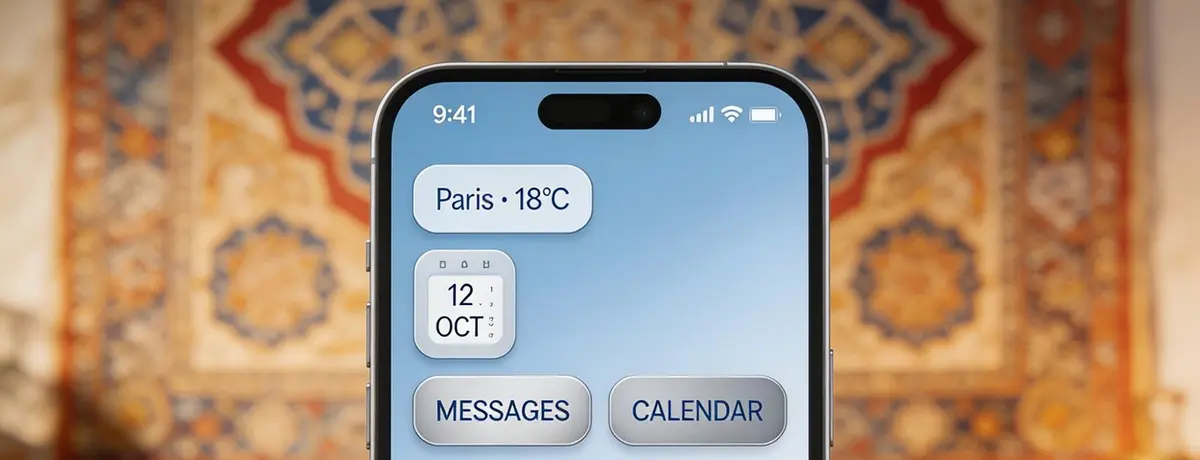
Do you think you are doing everything right in your e-export operations? Your products are of high quality, your logistics network is robust, and you are allocating a significant portion of your budget to advertising campaigns. However, the data tells a completely different story: while your conversion rates are running smoothly in the European market, they are hitting a wall in the Middle Eastern market. If you are experiencing this familiar scenario, the problem is likely not in the language translation, but in the misalignment of your design's cultural DNA.
By 2026, competing in the global market no longer simply means “having an English website.” Today's conscious consumer does not trust platforms that do not appeal to their cognitive habits and feel foreign. The expectations of a user in the Middle East differ fundamentally from those of a manager in Germany, not only aesthetically but also psychologically and functionally.
What is Cultural UI/UX Compatibility? Why is it Vital?
Cultural UI/UX compatibility is the optimization of the user interface and experience elements of a digital product (website or mobile application) according to the local habits, psychological expectations, and cultural values of users in the target geography. This process involves not just the translation of texts; it encompasses the reconstruction of the layout, color theory, iconography, and user journey according to the cultural codes of that region.
In practice, we often see this: Many brands carry their minimalist and “cold” design language designed for Europe directly into the Saudi Arabian or United Arab Emirates market. The result? A brand image perceived as “unsafe and empty” in the Middle Eastern market. However, a successful international SEO service and marketing strategy should give the user the feeling of “this is made for me” within the first milliseconds they enter the site.
Comparison of Differentiated UI Design for European and Middle Eastern Markets
Beyond Reading Direction: The Psychology of RTL (Right-to-Left) Architecture
The biggest mistake when targeting the Middle Eastern market is simply aligning the text to the right. However, RTL compatibility requires mirroring the entire mental model. The user's eye starts at the top right corner of the screen and follows this direction while drawing an "F" or "Z" pattern. If you leave your navigation menu or critical CTA (Call to Action) buttons on the left as per European standards, your potential customer in the Middle East will ignore these elements.
Professional Tip: Mirror not just the texts, but also the progress bars, back buttons, and even images containing chronological sequencing. For instance, while a graph showing the flow of time may flow from left to right in Europe, it should be designed to flow from right to left in the Middle East. This small detail reduces the user's cognitive load and increases the likelihood of conversion.
Based on our experience working with clients, improperly mirrored RTL design can increase the bounce rate by up to 60%. The moment the user feels that the site is foreign to them, the trust bond breaks. At this point, no matter how strong your strategy for advertising in Arab countries is, if your landing page does not provide this cultural compatibility, your budget is going to waste.
The Cultural Semantics of Colors and Typography
Colors are not universal. White, representing “purity” and “minimalism” in Europe, may symbolize mourning in some Asian cultures. Similarly, while green is associated with sustainability and the environment in Europe, it is the strongest representation of holiness, wealth, and prestige in the Middle East. In the 2026 digital marketing world, you need to consider not only your brand guide but also the anthropological data of your target market when choosing your color palette.
European Market: Functionality and Calmness
In the European market, particularly in the B2B segment, the philosophy of “less is more” prevails. Users dislike unnecessary visual clutter and want to access information quickly. In typography, sans-serif fonts and wide whitespace are indicators of professionalism. If you use aggressive colors and complex animations in this market, your brand may be labeled as “cheap” or “amateur.”
Middle Eastern Market: Visual Richness and Trust
In the Middle Eastern market, the situation is quite the opposite. Empty spaces may be perceived as “lack.” Visual richness, golden touches, deep greens, and high-quality, human-connecting visuals build trust. In typography, the appropriate use of modern Arabic calligraphy that aligns with digital standards (modern interpretations of Kufi or Naskh styles) elevates the perception of locality.
Tasarım Unsuru Avrupa (Batı) Yaklaşımı Ortadoğu (MENA) Yaklaşımı
Mizanpaj Minimalist, geniş boşluklu Yoğun, zengin içerikli
Okuma Yönü Soldan Sağa (LTR) Sağdan Sola (RTL)
Güven Faktörü Sertifikalar, GDPR uyumu Sosyal kanıt, WhatsApp, insan yüzü
Renk Paleti Mavi, Gri, Pastel tonlar Yeşil, Altın, Canlı Kırmızı/Turuncu
Social Proof and Communication in Localized User Experience
Psychological triggers that affect users' purchasing decisions also vary by region. For a user in Europe, a “Trustpilot” score or the seal of an independent auditing firm may be sufficient as a signal of trust. However, in the Middle East, commerce is still largely “relationship-oriented.” Simply leaving an email address on an e-commerce site can undermine your sales in that market.
Application Suggestion: Always make the WhatsApp icon visible in the bottom right corner (bottom left if RTL) on the sites you prepare for the Middle Eastern market. Users want to know they can interact with a real person, not a bot. For the European market, during the advertising process in European countries, make data privacy (GDPR) emphasis a part of the design.
To speak of a real-life example; by localizing only the trust logos and communication methods on the payment page of one of our e-commerce clients, we increased the order completion rate from Gulf countries by 22%. While the “add to cart” button is sufficient for the European user, the option “Buy Now and Get Support via WhatsApp” proved much more convincing for users in the Middle East.
Technical Requirements in E-Export Website Management
Cultural compatibility is not just about the visible part; the infrastructure must be ready for it as well. By the standards of 2026, when creating a global web design strategy, multi-currency, local payment methods, and dynamic content management (Headless CMS) should be standard. For example, while credit cards and PayPal are common in Europe, “Cash on Delivery” is still indispensable in certain segments in the Middle East. Your design should present these options elegantly.
Moreover, region-based speed optimization (using CDN) is critically important. If you are receiving a UI/UX design service, ensure that your designer focuses not only on aesthetics but also on loading the site under 1.5 seconds on a fiber connection in Dubai as well as on a mobile network in Berlin. According to Google data, a one-second delay in loading time can lead to losses of up to 20% in mobile conversions.
UI design process and analytical data by 2026 standards
Key Points
- Language is a Start, Not an End: Simply translating words is not enough to achieve cultural alignment; the entire interface should be mirrored.
- Psychological Color Selection: Strengthen brand perception by selecting color palettes that are in line with the cultural codes of your target market.
- Device Habits: The Middle Eastern market is approaching a "Mobile-Only" rather than a "Mobile-First" approach; designs should be mobile-centric.
- Trust Signals: Certifications and privacy are forefront for Europe, while accessibility and personal communication (WhatsApp, etc.) are crucial for the Middle East.
- Reduce Cognitive Load: Smoothen the experience by using the iconography and navigation models familiar to the user.
Frequently Asked Questions
Why aren’t Google Translate or AI translations enough?
AI can translate text, but it cannot organize cultural nuances, local idioms, and most importantly, visual hierarchy. An incorrect visual choice or an un-mirrored layout can damage your professional image.
Does RTL design greatly increase website costs?
If started with the right infrastructure (e.g., modern CSS frameworks), the cost increase is minimal. However, if added later, it may require the entire design to be demolished and rebuilt, which exponentially increases costs.
What are the safest color choices for Europe?
Typically, combinations of navy blue, gray, and white, representing trust and professionalism, yield the highest performance in B2B and technology sectors.
Why is font selection challenging on Arabic sites?
Arabic characters are more complex than the Latin alphabet. Readability rapidly decreases in small points. Therefore, specialized fonts optimized for the web (like modern Arabic fonts offered by Google Fonts) should be used.
What is the difference between Localization and Translation?
Translation finds the corresponding words; localization adapts the entire experience of the product (measurements, date formats, colors, visuals) to the local culture.
The Signature of 212 Medya in a Global Vision
Establishing a presence in the global market is like a complex game of chess. A wrong UI/UX move can render your entire marketing budget ineffective. As 212 Medya, we have been building digital bridges for both European and Middle Eastern market giants for years. With our experienced team, we develop not just visual designs but also region-specific user experience strategies. If you want your e-export site to "speak in its own language" in every geography in the world, we are here with a professional vision.
You can contact us to lay a professional foundation for your strategy and regain customers lost due to cultural incompatibility. A well-designed user experience is the strongest key to your global success.