
Showing a Different Website to Each Visitor: Doubling Conversion Rates with AI-Supported Dynamic Content (Hyper-Personalization)
By offering a personalized website for each visitor, increase your conversion rates by 200%. Check out our 2026 AI website optimization and hyper personalization guide now!
You are allocating thousands of liras for advertising your website to attract traffic, but do you notice that over 95% of your visitors leave your site without any interaction? Potential customers disappearing within seconds on your homepage is not because your offered value does not appeal to them, but likely due to you giving them a "one-size-fits-all" static message. The era of persuading the entire world with a single website has come to an end in the digital marketing dynamics of 2026.
In practice, we often see this: Showing a user who enters an e-commerce site and is only looking at men's shoes, women's cosmetic products or general discount banners on the homepage is equivalent to turning that customer away at the door. However, if that user had seen models that suit their style and special offers for categories they previously inspected the moment they entered the site, the likelihood of conversion would have increased exponentially. This is where hyper personalized web design comes into play.
What is Hyper Personalized Web Design?
Hyper personalized web design is a dynamic user experience strategy that uses artificial intelligence and real-time data analytics to instantaneously change a website's content, visuals, and offers based on each visitor's past behaviors, geographic location, interests, and purchase intentions.
This approach goes far beyond traditional segmentation. We no longer group users simply as "ones coming from Istanbul" or "women aged 30-40." With 2026 technologies, we create "segment-of-one," meaning individualized segments. The moment your visitor steps onto your site, the AI engine predicts their intent and rebuilds the page for them in that instant. It’s akin to offering each user a unique store experience.
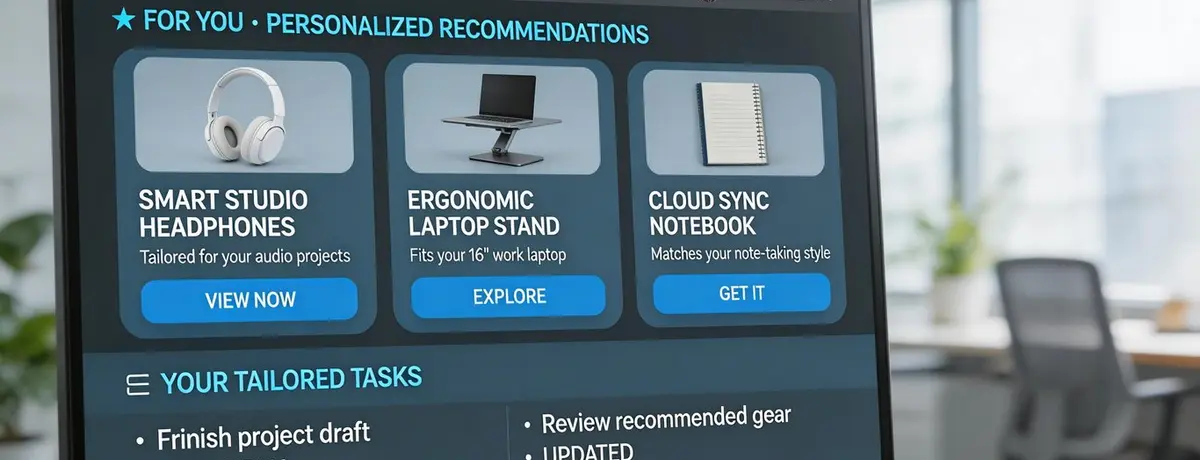
Dynamic website interface changing in real-time with artificial intelligence.
Static vs. Dynamic Content: The Dramatic Difference in Conversion Rates
Based on our experience working with clients, static websites cannot go beyond being mere digital brochures by 2026 standards. However, in our understanding of UI/UX design service, our focus has shifted to providing a smart structure that not only presents aesthetic design but also anticipates the user's needs.
The table below clearly illustrates the performance difference between sites where hyper personalization is applied and traditional static sites:
Metrik / Özellik Statik Web Sitesi AI Destekli Dinamik Web Sitesi
Ortalama Dönüşüm Oranı (CVR) %1.5 - %2.8 %6.2 - %12.5
Hemen Çıkma Oranı (Bounce Rate) Yüksek (%60+) Düşük (%25-35)
Müşteri Edinme Maliyeti (CAC) Sabit/Yüksek %40'a varan düşüş
Kullanıcı Deneyimi Genel / Sıkıcı Relevan / Bağ kuran
İçerik Sunumu Sabit Manşetler Niyet tabanlı (Intent-based)
As you can see, the difference is not limited to numbers; the feeling your brand leaves with the user, "They understand me," is the key to long-term loyalty. You can conduct a basic A/B test to see which headline works better; however, for advanced success, you should show each user their own winning headline.
How Does AI Website Optimization Work?
At the heart of an AI-powered system lies the speed of data processing. The moment a user clicks on your site, AI customer segmentation algorithms scan the following data in milliseconds:
- Traffic Source: Did the user come from a LinkedIn ad or did they perform a technical search on Google?
- Device and Context: Are they connecting from a mobile device while on the go, or are they conducting thorough research from an office desktop?
- Past Behaviors: Which pages did they visit earlier, what did they add to their cart, or which blog articles did they read?
- Predictive Analysis: Based on data from thousands of users with similar profiles, the next step of what this user will buy or what information they will need is predicted.
Professional Tip: Personalization should not be limited to content alone. For example, with the very popular AI chatbot integration in 2026, assistants that instantly answer technical questions specific to the product the user is looking at directly affect conversion rates.
According to HubSpot's data for 2026, personalized calls to action (Smart CTAs) generate 202% more conversions compared to general CTAs. HubSpot Research. You don't need a huge budget to adapt this data to your own business; you can progress step by step with the right strategy and proper technical infrastructure.
Comparative screenshot showing that the same website appears with different content for two different user types.
Sectoral Application Scenarios: Real-Life Examples.
To understand the power of dynamic content management, we must look at the results it has delivered across different sectors. In a strategy we implemented at a leading B2B manufacturing company, we dynamically changed the reference logos and success stories on the homepage according to the user's country and IP address. The result? We observed a 45% increase in form submission rates.
1. Hyper Personalization in E-commerce
In an e-commerce client, we utilized a "personalized homepage layout" instead of a "smart cart reminder." When the user entered the site, if they had previously looked at outdoor equipment, the first visual they encountered was not a discounted camping pot but a sleeping bag that matched the tent model they viewed. This represents an approach that fundamentally changes our understanding of e-commerce website design.
2. Intent-Based Content in Health Tourism
In a clinic providing services in health tourism, we dynamically changed landing page content based on the search terms of users coming from ads. While showing a price-focused table to someone searching "hair transplant prices 2026," we highlighted the video and technical details of the specialist doctor for someone searching "best hair transplant techniques." This personalization allowed for a much more efficient use of the advertising budget.
You can make simple personalizations at a basic level using Google Tag Manager; however, for advanced AI integrations, it is necessary to involve data science in the processes of landing page design.
Data Privacy and 2026 Standards: Compliance with KVKK and GDPR.
The most common mistake when doing hyper personalization is pushing the boundaries of trust while collecting user data. In 2026, we can no longer rely on third-party cookies due to the privacy policies of Apple and Google (Cookieless Future). This situation forces brands to collect their own "first-party data."
When setting up dynamic content management systems, it is crucial to obtain the user's explicit consent and to faithfully implement protocols like GA4 Consent Mode v2. When you transparently state that you are using the data solely for personalization and that it is anonymized, users become much more willing to share this data in exchange for a better experience.
In practice, we often see this: Companies that design privacy notifications not as an obstacle but as a UI element that builds trust are 30% more successful in collecting user data. Trust is the most valuable currency of 2026.
A Professional Roadmap: Where to Start with Personalization?
Transforming your website into an AI machine that looks different for each visitor won’t happen overnight. However, you can achieve quick wins by following these steps:
- Data Audit: Are your existing GA4 data meaningful? Identify the drop-off points in the user journey.
- Identify Critical Segments: Who are your most valuable 20% of customers? Design a unique experience for them first.
- Select Dynamic Elements: Start by making only the homepage banner and CTA buttons dynamic in the initial stage.
- Iterative Testing: Monitor whether the variations offered by AI truly lead to conversions.
You can run trials with basic free tools (such as next-gen alternatives to Google Optimize); however, for large structures with thousands of SKUs or service titles, using automated AI website optimization tools and getting strategic support from an experienced agency minimizes margin for error.
Key Points
- Hyper personalization relies on real-time data, unlike static segmentation.
- To increase conversion rates, you should personalize not only visuals but also calls to action (CTAs).
- In 2026, a personalization strategy that does not comply with data privacy regulations can rapidly damage brand reputation.
- Starting with small steps (such as greeting based solely on geographic location) and transitioning to AI models is the healthiest path.
- Personalization should not negatively impact page load speed (LCP); therefore, server-side solutions should be preferred.
- Correctly analyzing the user's intent is far more valuable than demographic data.
Frequently Asked Questions
Does personalization negatively affect SEO performance?
No, when done correctly, it positively impacts. While presenting the static and optimized main version of the site to search engine bots (like Googlebot), the dynamic version is presented to users. In addition, since user experience signals (like time on site, etc.) will improve, your SEO scores will increase.
Is AI-supported personalization a very expensive investment?
It used to be, but in 2026, thanks to SaaS solutions and API-based AI engines, it has become accessible for businesses of all sizes. The return on investment (ROI) often pays for itself within the first 6 months through a reduction in advertising costs.
Does dynamic content management slow down the site?
If all operations are done on the browser side (Client-side), there might be some slowdown. However, we at 212 Medya use infrastructures that manage these processes on the server-side (Edge computing) to prevent performance loss.
Is personalization necessary for a small business?
If you are advertising, absolutely yes. The more accurately you meet the traffic coming from ads, the more return you will get for every penny. Regional-based personalizations can create immense differences even for small businesses.
What data can I use for personalization?
The user's location based on their IP address, referral source (UTM parameters), browser language, previous on-site searches, and any historical purchase data are the most fundamental and effective data sources.
In conclusion, the winners of digital marketing in 2026 will not be those who extend the same brochure to everyone but those who look each visitor in the eye and offer them what they need. Hyper personalization is not a luxury; it is the only way to be noticed in a noisy digital world.
At 212 Medya, we combine our years of digital marketing experience with the power of artificial intelligence. If you want your website to transform from just a showcase into an intelligent sales representative working 24/7, developing a strategy with our professional team will make a difference. We are ready to scientifically boost your conversion rates.
To create a custom digital roadmap for your business and get to know our AI-supported systems, you can contact us today through our request a quote page.