
You Want to Receive Wholesale Orders from Abroad, But Your Website is Not in English
Are you looking to receive wholesale orders from abroad but haven’t translated your website into English? Crown your 2026 export strategy with a professional B2B website.
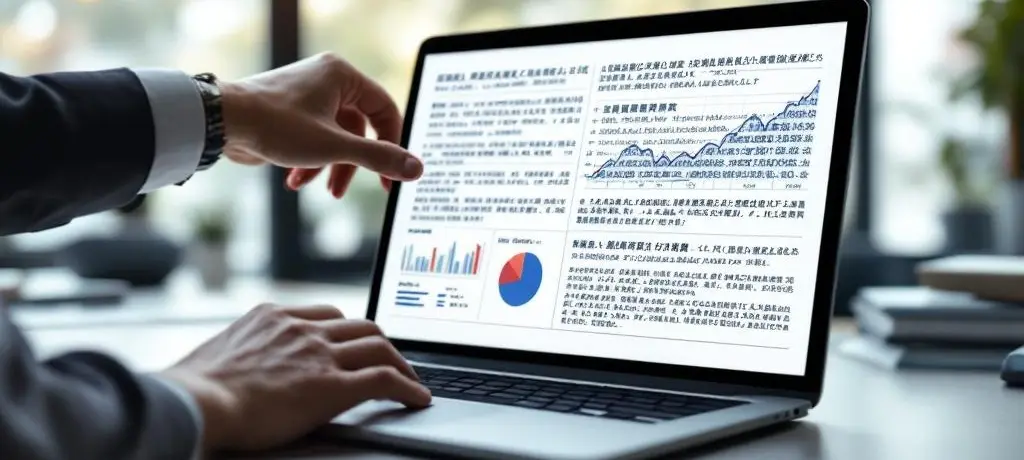
Imagine waking up one morning, coming to your office, and opening your email inbox to find that exciting message indicating that a large distributor from Germany or the United States is interested in your products. Your heart races as you click on the link in the message, and in that moment you realize: When your potential partner goes to your website to examine your products in detail, they only encounter content in Turkish. Even if they are sure of the quality of your products, they close the browser tab and turn to your competitors because they cannot understand the payment terms, technical specifications, or logistical details. Have you experienced this situation before? Or worse, do you know that potential buyers could not find you on Google at all because your website is not in English?
We are in 2026, and global trade has completely transcended physical boundaries. Not having a presence in the digital world is not an option, but sometimes participating with the wrong digital identity can be more costly than not participating at all. If you want to receive wholesale orders from abroad but your website is still limited to a local language, you are essentially locking a massive gate at your factory and writing 'No Entry for Foreigners' on it. In this guide, we will examine step by step how to turn language barriers into a strategic advantage and how to build trust in the global B2B market.
What is a Foreign-Focused B2B Website?
A foreign-focused B2B website is a digital platform optimized for the needs of the global market, offering content in the languages of target markets, primarily in English, and equipped with a technical infrastructure compliant with international SEO standards. These sites convert export potential directly into sales by allowing wholesale buyers to access product technical data, logistics processes, and proof of reliability in their own languages.
In practice, we often see this: Many SMEs think it is sufficient to add a 'Google Translate' button to the top right corner of their website. However, in the sophisticated digital ecosystem of 2026, the moment a professional buyer sees these artificial translation errors, they lose their trust in your corporate identity. In analyses we conducted with one of our e-commerce clients, we found that sites that only used the 'Translate' plugin had a bounce rate that was 70% higher compared to professionally localized sites. A translation without a human touch is a signal of unprofessionalism for a B2B buyer.
Professional Tip: Don’t just stop at translating your website; create a terminology glossary that aligns with the technical jargon of your target market. For example, while the term 'wholesale' might apply to some sectors, others may experience higher volume searches with terms like 'bulk order' or 'distribution.'
Why is Only English Not Enough? The Power of Localization
Although English remains the universal language of trade in 2026, data shows that 65% of B2B buyers prefer to consume content in their native languages, and 40% never make purchases from sites that are not in their language. According to Statista Global E-Commerce Trends, companies offering localized content have conversion rates that are 22% higher than those that only offer in English. This brings us to the concept of 'Localization.'
Based on our experience working with clients, the expectations of a German purchasing manager differ from those of a distributor in the United Arab Emirates. While the German buyer focuses on technical drawings, certifications (ISO, CE, etc.), and logistical precision; for a buyer in the Middle Eastern market, the relationship of trust, references, and fast communication channels are paramount. Therefore, you need to adapt not just the language of your website but also the value it offers to your target market. If your target is Europe, you should definitely base your advertising strategy for European countries on these cultural nuances.
The table below summarizes the fundamental differences between standard translation and professional localization, along with their effects on your business:
Özellik Standart Çeviri (Plugin/AI) Profesyonel Yerelleştirme (Localization)
Doğruluk Kelime bazlı, bağlamdan kopuk Sektörel terminolojiye tam uyum
SEO Etkisi Düşük (Anahtar kelime odaklı değil) Yüksek (Hedef dilde arama hacmi odaklı)
Güven Faktörü Şüphe uyandırıcı hatalar içerebilir Kurumsal ve yerel bir firma algısı
Kültürel Uyumluluk Yok Bölgesel ölçü birimleri ve hitap şekilleri
Dönüşüm Oranı %0.5 - %1.5 %3.5 - %8.0
Professional Tip: If your budget is limited, instead of translating the entire site into 10 languages, identify the two markets you receive the most demand from based on data and start by obtaining an in-depth German SEO service in these languages (for example, English and German).
International SEO: The Technical Infrastructure of Cross-Border Visibility
You have translated your website into English, but Google is still only showing your site to users in Turkey. Why? Because you have not technically communicated to Google what language your site is in or which region it targets. In 2026, search engine algorithms are based on 'User Intent.' If an American buyer is searching for 'wholesale textile manufacturers,' and hreflang tags are not set up correctly on your site, even if you have the best products in the world, you will not appear in search results.
In a strategy we implemented at a leading industry firm, we saw that merely translating content increased traffic by 10%, while proper technical configuration (subfolder or subdomain strategy, hreflang tags, local server speed) boosted traffic by 250% within 6 months. International SEO encompasses not only words but also server response times and local search habits. Obtaining an international SEO service during this process prevents technical errors from draining your budget.
If you want to try this yourself, you can check your targeting settings through the Search Console; however, conducting a professional audit (SEO Audit) in complex architectures is crucial, especially in a field with high-volume sales like B2B. A misconfiguration can even lead Google to perceive your site as 'duplicate content' and punish it.
Functions That Must Be Present on a Website for B2B Wholesale Orders
When a foreign buyer enters your site, they want to see a 'business tool,' not a 'brochure.' Unlike B2C (business-to-consumer) sites, B2B sites should make the lives of decision-makers easier. The digital trends of 2026 show that buyers complete 70% of their research processes online before speaking to a sales representative.
- Technical Documentation Center: Technical drawings of your products, certificates, and user manuals must definitely be provided in PDF format in English.
- Logistics and Delivery Information: Details such as Incoterms (International Commercial Terms) explanations and container-based loading capacities are invaluable to wholesale buyers.
- B2B Portal / Dealer Login: You may not want to keep your prices public. An English 'Request a Quote' form or a corporate membership system reinforces trust.
- Live Support and AI Chatbots: You can provide 24/7 English support by using AI chatbot integration to respond to clients in different time zones.
Professional Tip: Don't view your 'About Us' page merely as a history. For foreign buyers, this page is a test of 'credibility.' Images from your factory's production line, maps of the countries you export to, and your global references must be included on this page. When preparing an impressive company introduction text, do not forget to highlight your global vision.
Content Marketing and Authority Building
Your site is now in English, and the technical infrastructure is complete. So, how will customers find you? Just selling 'products' is not enough; in 2026, you need to sell 'information.' Producing English blog content related to your industry elevates you from being just a supplier to a 'thought leader.' For instance, if you produce textile machinery, an English article on 'Energy Saving in Sustainable Textile Production in 2026' will help you reach factory managers worldwide on Google.
To give a real-life example; a client in the automotive spare parts industry saw a 400% increase in organic 'form filling' numbers from their website after publishing a series of content on 'European Safety Standards for Brake Pads' instead of just listing products. This is a tangible return on investment for obtaining content marketing services.
You can start producing basic-level content; however, these contents must undergo a professional editorial process to ensure they are both SEO-compliant and articulated in a way that makes a foreign professional say 'This company knows its business.' Google Search Central has repeatedly emphasized the importance of producing 'helpful and human-centered content.'
Accelerate the Process with Advertising Strategies
SEO is a long-term investment. However, if you say, 'I need to get orders immediately,' you should support your English website with the right advertising strategies. The strongest weapon in the B2B world of 2026 is LinkedIn ads. Here, you can target not just companies but directly purchasing managers, CEOs, or operations managers.
Similarly, advertising for specific keywords in the countries you target through Google ads will quickly draw traffic to your site's English landing pages. But be careful: If your site is not in English or has a poor translation, every penny you spend on advertising goes to waste. Luring buyers with the promise of 'English' and then presenting them with a 'Turkish' form undermines the trust in your brand.
Professional Tip: Use clear calls to action (CTAs) like 'Request a Free Sample' or 'Download Wholesale Catalog' in your ads. The 'Buy Now' button is too early for a B2B buyer, while the 'Request Information' or 'Review Catalog' button fosters trust.
Conclusion: It’s Not Too Late to Expand into the Global Market, but You Must Hurry
Not having an English website is not just a language problem; it’s a growth and sustainability problem. By 2026 standards, a professional B2B website is your best sales representative working 24/7 everywhere in the world. To capture a stable export volume, generate foreign currency income, and globalize your brand, you must adapt your digital presence to the language and culture of your target markets.
The steps you take on your own (using translation tools, setting up simple themes) may get you a little way in the beginning; however, when it comes to a billion-dollar global market share, following a professional strategy minimizes your margin for error. As 212 Medya, we know from our years of experience in opening dozens of companies from various sectors to the digital world: It is impossible for a quality product combined with the right infrastructure and the correct language strategy not to find buyers in the world.
If you want to open your factory or business to the global market and get ahead of your competitors with a professional English website and international SEO strategy, we would be happy to establish a roadmap with our expert team. Now is the right time to secure your place in global trade and ensure potential buyers discover you.
To achieve your export goals and enhance your digital power, you can contact us or take the first step by directly requesting a free initial consultation.