
Take an 'X-ray' of Your Google Ads Account: 212 Medya's 2026 Performance and Security Audit Checklist
Is your Google Ads budget going to waste? Analyze your account's performance with 212 Medya's 2026 audit guide, stop budget leakages, and start winning immediately!
Your advertising panel lights are green, your click numbers are increasing every day, but when you look at your bank account at the end of the month, are you not seeing the same growth? You may feel that your Google Ads budget has turned into a massive black hole, your competitors are leaving you behind, or your phones are not ringing at all due to the poor quality of clicks. As of March 2026, the digital advertising ecosystem has become more complex and AI-focused than ever. It is no longer enough to simply 'add keywords'; data security, feeding algorithms correctly, and a strategic 'check-up' have become vital.
As 212 Medya, while managing the accounts of thousands of clients from various industries for years, we have noticed this: Most business owners are using an account that could actually yield very good results inefficiently due to just a few critical technical errors or security vulnerabilities. In this article, we will step by step examine how to conduct a Google Ads account audit according to 2026 standards, which hidden settings can save your money, and what to look for while taking an 'x-ray' of your account.
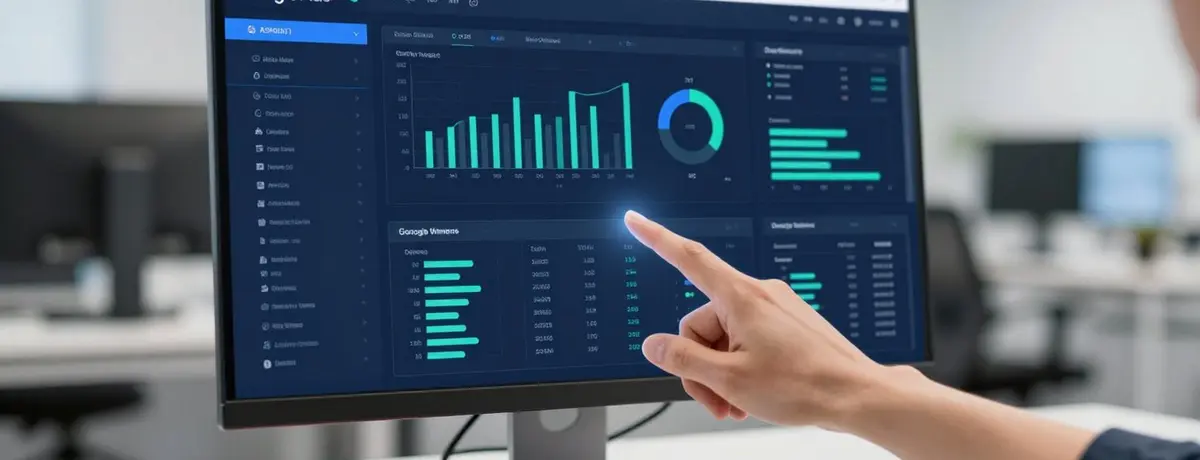
A digital panel in a modern office environment displaying complex Google Ads data graphs
What is a Google Ads Account Audit?
A Google Ads account audit is the process of analyzing an advertising account from end to end through a professional lens regarding strategic goals, technical setups, data security, and cost efficiency. This process aims to identify structural problems that prevent the advertising budget from transforming into a real return on investment (ROI), not just to reduce cost-per-click (CPC).
In practice, we often see this: Many advertisers manage their accounts with a 'set and forget' mentality. However, in 2026, Google's AI algorithms are changing so rapidly that a campaign structure that worked perfectly six months ago can become just a burden consuming the budget today. A professional audit ensures that your ads not only 'get seen' but also 'generate profits'.
1. Security and Policy Compliance: How Secure is Your Account?
In 2026, digital security has taken precedence over performance. Google no longer just looks at your ad content; it restricts accounts that do not complete processes like advertiser verification and two-factor authentication. If you are operating in sensitive areas such as financial services or health, it is essential to have thoroughly completed the Google Ads financial services verification process.
According to our experience working with clients, 30% of accounts are operating in 'restricted access' mode due to policy violations they are not even aware of. This situation leads to your ads being shown less and having to pay more in auctions. When conducting a security audit, you should definitely check the 'Policy Manager' panel and review the permissions of third-party applications linked to your account.
Professional Tip: Be sure to define at least two different email addresses at an administrator level in your account, and activate hardware security keys or mobile-approved two-step verification on both. This is your biggest defense against the risk of your account being stolen.
2. Data Accuracy and Conversion Tracking Audit
Without data, AI flies blind. In 2026, Google Ads is entirely based on 'Smart Bidding' strategies. If your conversion codes (conversion tags) are incorrectly set up or if 'Enhanced Conversions' are not active, Google's AI will start to target the wrong people. In one of our e-commerce clients, we noticed that adding to cart data was counted as 'purchase'; this led the system to focus on an audience that would actually not be making purchases.
While taking an x-ray of your account, you should ask yourself the following questions: Are phone clicks actually being counted? How many of the form fill-outs are real customers? Advertising without setting up tracking is like driving a car in the dark with the headlights off. In 2026 standards, having completed setups for server-side tracking is mandatory for surviving in a cookie-less world.
A close-up visual of an expert examining complex data analytics software at a computer
The table below shows the differences between the critical metrics we check during a basic advertising account analysis at the DIY (do-it-yourself) and Professional levels:
Denetim Kalemi Temel (DIY) Denetim Profesyonel 212 Medya Denetimi
Dönüşüm Takibi Sadece teşekkür sayfası kontrolü. Server-Side tracking, Gelişmiş Dönüşümler ve Offline import.
Negatif Kelimeler Bariz alakasız kelimelerin elenmesi. N-Gram analizi ile gizli bütçe kaçaklarının tespiti.
Tıklama Güvenliği Google'ın standart filtresine güvenmek. IP engelleme ve sahte tıklama önleme yazılımları ile aktif koruma.
Yapay Zeka Kullanımı Tüm önerileri kabul etmek. Algoritmayı besleyecek verinin temizlenmesi ve manuel kontrol.
3. Campaign Structure and Architecture Analysis: HAGAKURE or Traditional?
In an audit conducted at an industry-leading firm, we found that a separate campaign had been opened for each keyword. In the world of 2026, this 'micro-management' approach no longer works. To quickly complete Google's learning phase, data needs to be consolidated. Modern 'Hagakure' structures or 'Modern Search' strategies work by blending broad match keywords with smart bidding strategies.
Having too many campaigns and ad groups in your account leads to data dispersion and prevents Google from learning. The issue of Google Ads not being able to exit learning mode often stems from these structural mistakes. During the audit, spotting cannibalizing keywords and simplifying the structure typically reduces costs by immediately 20%.
Application Suggestion: Group your campaign structures not based on 'Product/Service Category', but on 'User Intent' (Search Intent). Do not serve the same ad text to someone seeking information as to someone ready to purchase.
4. Ad Quality and User Experience (UX)
Getting clicks on your ad is only half the journey. The other half is where the user lands. If you are running an ad that says 'Contact Us Now' and directing the user to a slowly loading, mobile-incompatible homepage, it means you are throwing your money away. The quality of your website directly affects the 'Quality Score' assigned by Google.
One of the most critical items on our audit list for 2026 is the 'Ad Strength' score. However, there is a trap here: Google’s every ad deemed 'Excellent' does not always bring in the most sales. You need to manually check whether AI-generated assets are in line with your brand's tone. At 212 Medya, we use AI as an assistant, but we always leave the final touch to our experienced copywriters.
5. Budget Efficiency and Hidden Leakages: Why is a Free Ads Check-up Necessary?
Keeping the 'Display Network' option open in search campaigns or the depletion of your budget in 'Search Partners' are the most common budget leakages. Ads appearing inside mobile games often result from accidental clicks and have poor conversion rates. A free ads check-up process allows you to instantly shut down such 'junk traffic' sources.
In practice, we often see this: Many businesses run ads 24/7 across Turkey without analyzing the hours or regions that bring in the most conversions. If the data indicates that your target audience makes more purchases on Tuesday evenings at 10:00 PM, shifting the budget to those times (bid adjustment) is a wise move. You can see this yourself from the 'Dimensions' report, but turning this data into a strategy requires expertise.
A realistic photo of a professional consultant presenting performance data showing an increase in a meeting room
Key Points: Summary of the 2026 Audit List
- Security is the Primary Priority: Advertiser verification and 2FA must be complete.
- Data Signals Must Be Clean: Conversion tracking should measure not just clicks, but also 'qualified leads'.
- Manage AI: Be sure to set up 'negative keyword lists' and 'exclusions for brands' in PMax (Performance Max) campaigns.
- Mobile and Speed: Your landing pages' loading time should be under 2 seconds.
- Transparent Reporting: You should clearly see how much each keyword costs and how many sales it brings.
- Ad Copy: Focus on the tangible benefits offered to the user rather than clichés like 'the highest quality service'.
Frequently Asked Questions
How often should Google Ads account audits be conducted?
In the rapidly changing market conditions and algorithms of 2026, it is recommended to perform a superficial audit monthly and an in-depth Google Ads account audit quarterly. For large-scale budgets, this audit should be conducted weekly.
Why is my quality score low?
The quality score is a combination of the ad's relevance to the keyword, the expected click-through rate, and the landing page experience. If your site is slow or your ad text does not meet user intent, your score drops, leading to higher costs.
Should I always implement Google's automated suggestions?
No. Google's suggestions are often aimed at getting you to spend more and switch to 'broad match'. You should filter each suggestion through your business goals and consult an expert if necessary.
Is a free ads check-up really beneficial?
Yes, especially having an unbiased external pair of eyes look at the account is a great opportunity to identify the 'blind spots' that the internal manager may miss due to habit.
How do I detect fake clicks?
A sudden increase in the number of clicks while the time spent on the site drops, or constant forms coming from the same IP addresses are signs of fake clicks. You should protect your budget with methods to prevent fake clicks.
Conclusion: Advertising Success in 2026 is Not a Coincidence
Google Ads is a massive engine that can grow your business when used correctly, but it becomes a machine that grinds your money when mismanaged. As of March 2026, simply 'advertising' is not enough; you need to perfectly manage the data architecture, security layers, and user experience behind that ad. Taking an x-ray of your account is not only about finding errors but also about discovering hidden growth opportunities.
You can conduct your audit at a basic level; however, a professional perspective can select and extract the most profitable signals among billions. At 212 Medya, we view your advertising budget as a tool for growth rather than an expense. If you are also one of those saying, "I get thousands of clicks but my phones don't ring," we are here to help you elevate your ad account to 2026 standards.
Let's close those invisible holes in your account together and take your advertising performance to the top. You can evaluate our free advertising analysis offer to meet 212 Medya's expertise and secure your advertising budget, or you can contact us immediately.