
Headless E-Commerce Transformation: Why You Should Abandon Traditional Infrastructures in 2026?
What is headless e-commerce? Why should you abandon traditional infrastructures in 2026? Discover ways to increase speed and conversion with API-first commerce.
You are directing high-budget ads to your e-commerce site, traffic is increasing day by day, but are your conversion rates stagnant? Perhaps your users are losing patience waiting for the page to load on mobile devices and fleeing to your competitors. We are in the year 2026 and the pace of digital trade has reached a point that traditional systems can no longer support. In practice, we often see this: Many SMEs, while trying to respond to modern user expectations with the clunky infrastructures they established years ago, are unknowingly leaving a significant portion of their potential revenue on the table. So, what is the way to overcome this bottleneck and prepare your brand for the future? The solution lies in the Headless E-Commerce model, the biggest technological leap of recent years.
What is Headless E-Commerce? The New Architecture of Modern Trade
Headless e-commerce is a software architecture where the front end (frontend) that the user sees is completely separated from the back end (backend) where data and logical processes are executed for an online sales platform. In this structure, content and commerce functions can be flexibly delivered to any channel or device by working with the API-first commerce principle.
In traditional structures (monolithic), the front end and back end are tightly coupled. When you want to change a template, you risk disrupting the balance of the entire system. However, in the world of 2026, brands must be agile. Based on our experiences while working with our customers, businesses that break free from the monolithic architecture can achieve significant accelerations in their campaign preparation processes. This is because designers can focus solely on user experience (UX) without dealing with the background code, while developers can optimize data security and speed through APIs.
The headless architecture is not just a technical preference, but also a strategic business decision. This system allows your brand to provide a consistent shopping experience not only on your website, but everywhere from smartwatches to IoT devices, from social media stores to physical store kiosks.
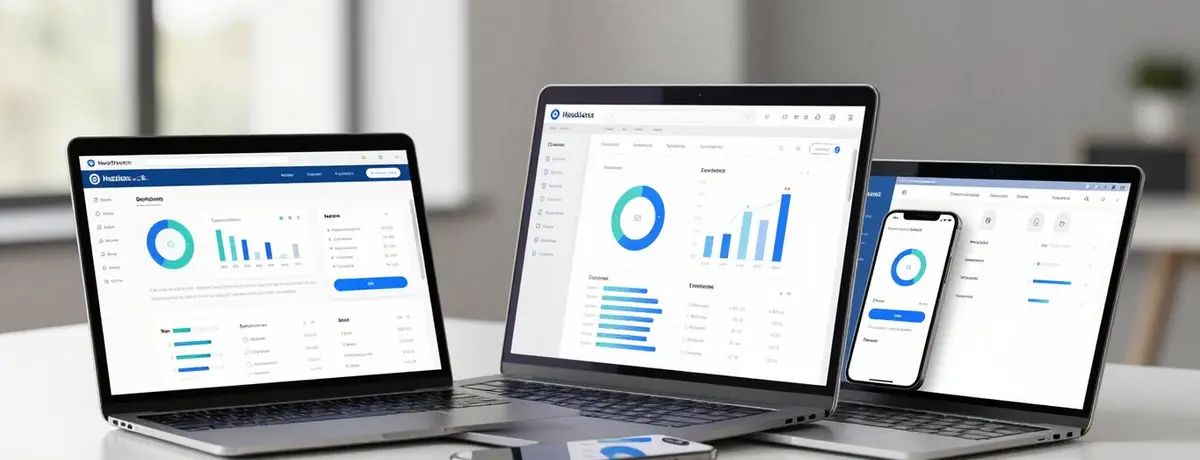
A technological visual showing the data transfer of headless e-commerce architecture to different devices
API-First Commerce: The Digital Backbone of 2026
In 2026, the concept we emphasize the most in the projects where we provide e-commerce consulting is the API-first commerce approach. In traditional systems, API (Application Programming Interface) works like a "patch" added to the system later; in headless systems, it is at the very heart of the architecture. This means that each function (cart, payment, product catalog) operates as an independent service.
So why is this so important? In a scenario we encountered at a leading firm in the industry, due to traditional infrastructure, the mobile application was pulling stock data from the website with a 5-minute delay, leading to serious customer complaints during campaign periods. When transitioning to an API-first structure, all channels began to be fed in real-time from a single data source (Single Source of Truth). This is a factor that not only increases operational efficiency but also directly affects customer loyalty.
Professional Tip: If you are planning a transition, instead of changing your entire system at once, you can start with a hybrid model by moving the area that experiences the most bottleneck (for example, just the checkout process) to a headless structure. This allows you to minimize your risk while observing performance increases.
Why Should You Abandon Traditional Infrastructures in 2026?
Why is the era of traditional (monolithic) systems coming to an end? In a period where the average attention span of users in 2026 has dropped to levels of 40-47 seconds and Google has positioned Core Web Vitals metrics as an important ranking factor, the cost of sluggishness is very high. However, it should be remembered that Google still views good content and relevance as the most important ranking factors. Recent studies by Gartner show that companies adopting modular commerce structures can deliver new features faster than their competitors.
The three biggest obstacles encountered in traditional infrastructures are as follows:
- Performance Ceiling: No matter how much you optimize, the code bloat brought by monolithic structures cannot advance page speed beyond a certain point.
- Limited SEO Flexibility: Traditional platforms trap you into their own URL structures and templates. However, within the scope of corporate SEO services, we want to freely manipulate the HTML structure of each page.
- High Maintenance Costs: Having to test the entire system for a small update is a waste of time and cash.
The table below summarizes the differences between traditional systems and headless architecture according to the market standards of 2026:
Feature
Traditional Infrastructure
Headless E-Commerce
Page Load Speed
Medium / Slow (2.5s+)
Ultra Fast (0.5s - 1s)
UX/UI Flexibility
Limited to Templates
Unlimited Customization
Channel Variability
Only Web and Basic Mobile
Omnichannel (IoT, VR, Social)
Development Speed
Slow and Risky
Very Fast and Independent
SEO Performance
Platform Restricted
Full Control (Maximum Score)
If you are managing a basic level e-commerce site, traditional structures may suffice for you; however, if you want to scale and compete in the global market, these limitations are the biggest barriers to your growth.
Protecting SEO During the E-Commerce Infrastructure Transition Process
Many business owners postpone the change due to the fear of "Will my Google rankings drop if I change the infrastructure?". They are right; because a faulty transition process can destroy years of effort in just a few days. In a transformation we performed for one of our e-commerce clients, we achieved a 15% increase in organic traffic by structuring 301 redirects and schema markup configuration at the API level. This is only possible with the right strategy.
It is critical to follow these steps during the transition process:
- Current State Analysis: Identify which of your pages receive the most traffic and which URL structures need to be preserved.
- API Integration and Data Migration: Move product, customer, and order data to the new headless backend without experiencing any data loss. In our e-commerce infrastructure change guide, we address this issue with technical details.
- Frontend Selection: Build an SEO-compliant (Server Side Rendering - SSR) front end with modern technologies like React, Vue.js, or Next.js.
Professional Tip: Since your page speed will increase tremendously in headless systems, your Core Web Vitals scores will also improve. To leverage this advantage, it is vital to monitor Google Search Console data in real-time after the transition and resolve issues within 24 hours.
Professional expert managing e-commerce data analysis and infrastructure transition
Hidden Costs and Benefits of Headless Transformation
No technological transformation is "free." The initial setup cost of headless e-commerce may be higher than ready-package systems. However, in the economic scenario of 2026, considering the Total Cost of Ownership (TCO), headless systems become more profitable in the long term. Instead of paying thousands of dollars annually for licensing fees, you enjoy the freedom of having your own architecture.
Based on our experience working with clients, a medium-sized business transitioning to a headless structure can achieve potential savings in server costs while obtaining a return on investment (ROI) within an average of 12-18 months due to the increase in conversion rates (CR). Additionally, the modular nature of the system makes integrating future technologies (such as AI-based personal shopping assistants) into the system a matter of just a few weeks of development work.
Key Points
- Speed is Everything: In 2026, a 1-second delay means a 7% loss in mobile conversions; headless solves this problem fundamentally.
- Flexibility: While your designers work on the frontend, your backend operations continue seamlessly.
- Security: The back end not being directly exposed to the internet may reduce some attack surfaces compared to traditional architectures, while headless architectures require a different focus due to the increased use of third-party JavaScript and APIs with regard to client-side security risks.
- Future Preparedness: Your infrastructure is always ready for voice search, VR stores, or next-generation payment systems.
- SEO Advantage: Since you can create your own HTML structure, you provide exactly what Google bots want.
Frequently Asked Questions
Is headless e-commerce suitable for small businesses?
Generally, it is more efficient for medium to large-scale businesses with high growth targets. However, boutique brands wanting to offer a very special user experience in a niche market can also stand out by choosing a headless infrastructure.
How long does the transition process take?
Depending on the size of your existing data and the customizations you want, the process can take between 3 to 9 months. Getting professional support helps to optimize this process.
Will my data be lost during the transition from a traditional infrastructure to Headless?
If a proper data migration strategy is implemented, there will be no data loss. Order history, customer memberships, and product reviews can be safely transferred.
Is it better for headless SEO?
Yes, because thanks to server-side processing (SSR) and full code control, page speeds are maximized. This directly provides an advantage in Google rankings.
Can I manage this system without my software team?
Headless systems require more technical knowledge. While easy-to-use panels (like Contentful, Strapi, etc.) can be set up for content management, it is healthiest to work with a professional agency for the continuity of the infrastructure.
Conclusion: Stay One Step Ahead in the Competition in 2026
The world is changing, technology is accelerating, and consumer tolerance is decreasing. Headless e-commerce transformation is not just a trend; it is the insurance of your brand’s digital presence in 2026 and beyond. Breaking free from the sluggishness of traditional structures and capturing flexibility with an API-first approach is not only a technical achievement but also a strategic move that will increase your market share.
Having an experienced guide by your side during this seemingly complex but highly rewarding transformation journey minimizes your margin for error. As 212 Medya, we approach the technical infrastructure, SEO strategies, and user experience design that your brand needs as a whole. With the right strategy, results accelerate; let us carry your brand among the winners of 2026 together.
To start your business's digital transformation and create a customized roadmap for you, get a quote now or contact our expert team.