
SEO at Light Speed with ikas: A Guide to Transforming Your Page Speed Scores into Sales
Is the slow loading of your ikas e-commerce site lowering your sales? Discover how to increase your page speed according to 2026 Core Web Vitals standards and multiply your conversions.
You are spending thousands of lira on advertising budgets, preparing flawless campaign visuals, and carefully drawing potential customers to your well-set-up ikas store. Your click-through rates are great, and the traffic flow is steady. However, when you look at Google Analytics or your ikas dashboard, you are faced with that annoying table: There is traffic, but sales are far below expectations. Abandonment rates are ringing alarm bells. Are you experiencing this situation?
If your answer is yes, the root of the problem is probably not the pricing of your products or your advertising targeting, but the loading speed of your site. In the merciless e-commerce competition of 2026, user patience is now measured not in seconds, but in milliseconds. Every millisecond that a potential customer waits for the loaded link brings them one step closer to your competitor's store. Even if you are selling on ikas, which offers a perfect infrastructure, no strong engine can accelerate while the handbrake is pulled if the right technical touches are not made.
In this guide, we will explore ways to turn the speed scores of your e-commerce site from mere technical metrics into cash flowing into the register. We will explain step by step how we stopped our customers' losses at the cart stage and how we dominated organic traffic.
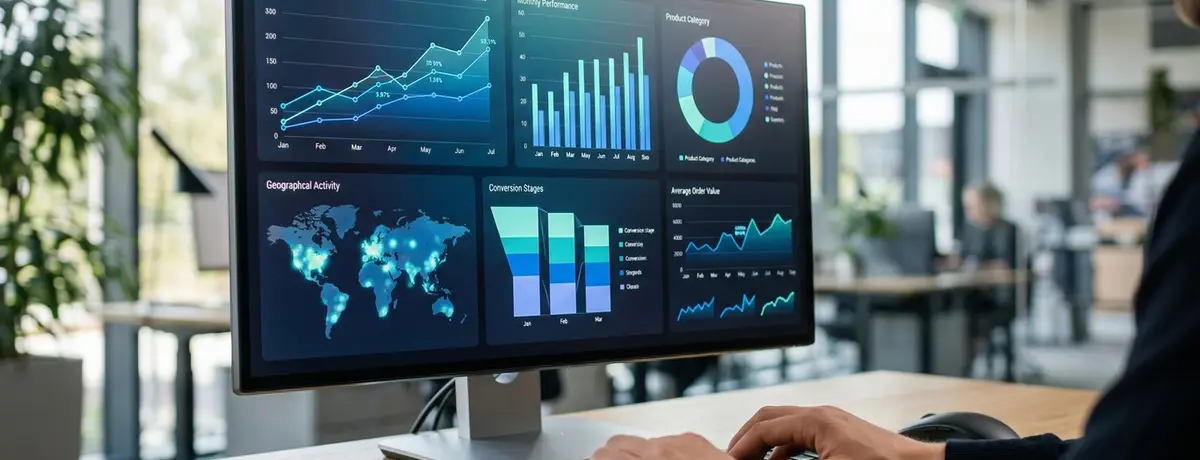
E-commerce dashboard and sales chart analysis
What is ikas SEO and Page Speed Optimization? ikas page speed optimization is the process of enhancing the server response time, image loading speeds, and Core Web Vitals metrics of your e-commerce site to perfect the user experience. This technical strategy aims to eliminate visitor waiting times while improving your organic ranking in search engines, directly increasing sales and conversion rates.
Search engines, especially Google, have an indexing logic that centers around the user. The faster a page loads, the more effectively the search engine bots crawl that site (crawl budget) and recommend it to users with more confidence. In short, speed is the key to visibility.
Why is Page Speed Not Just an SEO Criterion but a Sales Strategy in 2026? Many SME owners and marketing managers view page speed as a technical detail that only programmers should worry about. However, speed is one of the most important sales strategies that directly determines your profit margin. In 2026 standards, mobile-first indexing is no longer a choice but an absolute rule. In today's world, where traffic from mobile devices exceeds 80% of total e-commerce traffic, a slow-loading mobile site is no different from a physical store with its doors locked.
In practice, we often see this; brands with great products but a mobile loading speed exceeding 3 seconds are essentially throwing away nearly 40% of their advertising budgets. As cost-per-click (CPC) rates rise, visitors leave the site before fully viewing it (bounce rate). This situation lowers your quality score and further inflates your advertising costs.
The Striking Relationship Between Speed and Conversion Rate To better see the effect of milliseconds on revenue, let's examine the table below. This data reflects the average changes observed on e-commerce sites according to current consumer behavior in 2026:
| Page Load Time | Bounce Rate | Abandonment Rate | Average Conversion Rate (CR) |
|---|---|---|---|
| 0.1 - 1.0 Seconds | 15% - 20% | 35% | 4.5% - 5.2% |
| 1.0 - 2.5 Seconds | 28% - 35% | 52% | 2.8% - 3.4% |
| 2.5 - 4.0 Seconds | 45% - 55% | 71% | 1.2% - 1.8% |
| More than 4.0 Seconds | 65%+ | 88%+ | 0.5% Below |
| Professional Tip: Do not test your site's speed with the fiber internet network in your office. Your real customers may be connecting to your site on the metro, bus, or weak 3G/4G cellular data networks. Make sure you conduct your analyses by simulating throttled network connections while considering Google's mobile-first indexing criteria. |
Critical Moves to Maximize Speed Scores on the ikas Infrastructure ikas is inherently a very modern, cloud-based, and fast e-commerce infrastructure. However, some structural mistakes made by store owners while building the site can slow down this powerful infrastructure. This is where the difference of e-commerce SEO from traditional practices comes into play; managing dynamic pages containing thousands of products requires special expertise.
1. Smart Management of Image and Video Loads (Next-Gen Formats) A large portion of the weight of an e-commerce site is made up of media files. High-resolution banners and detailed product photos support sales, but when not presented in the right format, they can paralyze the site. JPEG or PNG formats are now cumbersome for e-commerce. In 2026, WebP and especially AVIF formats have become standard.
In a project we conducted at an industry-leading clothing company, we shortened the page loading speed by 2.1 seconds simply by converting the homepage visuals to the next-generation AVIF format and applying lossless compression algorithms. The result? We observed an immediate 18% organic increase in the add-to-cart rates within just one week.
Implementation Suggestion: Ensure that the size of the visuals you upload to your ikas dashboard does not exceed 150-200 KB. Avoid using large, auto-playing videos on your homepage sliders; instead, prefer optimized short loops or CSS animations.
Slow vs. Fast Website Conversion Comparison
2. Cleaning Up Third-Party Application and Script Clutter Live support tools, heatmap software, marketing automation codes, countdown timers... Each third-party application you add to your e-commerce site means an extra JavaScript code called from the outside. These codes send additional requests to the server and delay the rendering of the page.
Professional Tip: Remove all applications and plugins that you are not actively using. Instead of embedding codes directly into the theme for your marketing and analytics tools, have them load asynchronously through tag management systems (Tag Manager). This way, the content of the homepage can load while the background analytics codes do not keep the customer waiting.
3. Controlling DOM Size on Category Pages DOM (Document Object Model) size refers to the total number and depth of HTML tags in a webpage's code structure. Listing 100 products at once on your category pages may seem to offer the user many options, but it excessively burdens the browser. When the DOM size becomes too large, the site becomes sluggish, leading to stutters while scrolling.
At a basic level, you can apply this; limit the number of products displayed per page on your category pages to 24 or 36 and use a "Show More" button or smart lazy-load supported infinite scroll. For advanced users, it will be necessary to clean unnecessary `
` tags from the code architecture of your site.
Core Web Vitals 2026 Updates: Understanding LCP, CLS, and INP Metrics At the heart of Google's page experience algorithm are Core Web Vitals (Important Web Data). To convert your speed scores into sales, you must have a good understanding of the 2026 standards set by Google Core Web Vitals official documentation.
- LCP (Largest Contentful Paint): This is the time it takes for the largest visual or block of text on your page to become visible on the screen. The user begins to feel that the site has "opened" at this moment. Your LCP value must be below 2.5 seconds.
- CLS (Cumulative Layout Shift): This is when content shifts left and right, up and down while the page is loading. If a customer accidentally clicks on another ad or link because the page shifts while they are about to click the "Add to Cart" button, it means you have a CLS problem, and this can lead to a loss of trust.
- INP (Interaction to Next Paint): Replacing FID (First Input Delay) in 2024 and becoming one of the most decisive metrics of the algorithm in 2026, INP is the time taken between a user's interaction with your page (for example, selecting a product variant or opening the menu) and your site visually responding to it. If the site freezes when the visitor clicks the button, they will abandon the cart. For detailed technical information, you can check Interaction to Next Paint (INP) guidelines.
What You Can Do on Your Own and the Difference of Advanced Optimization The image resizing you can do in the ikas dashboard, simplifying theme settings, and removing unnecessary applications are quite beneficial as the first step. You can do this yourself, but if you are in a truly competitive industry and your cost-per-click is high, you need to go beyond the surface.
According to the experience we gained while working with our clients, the biggest speed bottlenecks of e-commerce sites often stem from a lack of server-side monitoring and fragmented data collection architecture. Advanced optimizations include advanced caching architecture, CSS/JS minification, and asynchronous loading scenarios. At this point, receiving professional e-commerce consulting to design a conversion-focused architecture without straining your technical infrastructure makes a big difference. Working with an experienced team not only turns your speed scores green but also ensures that your site becomes a revenue-generating machine.
Digital marketing agency experts are developing strategies
Key Points
- Every 1-second improvement in your page speed directly and measurably increases your conversion rates.
- Don't just compress images, convert them to next-generation WebP or AVIF formats recognized in 2026 standards.
- Ruthlessly clean up third-party ikas plugins and tracking codes that you are not using and that are idle.
- Test your site's speed not just on desktop or Wi-Fi networks but with simulations of weak mobile connections (throttled 3G/4G).
- Regularly monitor Google's LCP, CLS, and especially user interaction metrics like INP (Interaction to Next Paint) through Search Console.
Frequently Asked Questions
How is page speed measured on the ikas infrastructure?
You can measure the speed of your ikas store using tools like Google PageSpeed Insights, GTmetrix, or Pingdom. However, you get the most accurate data from the Core Web Vitals report within Google Search Console, which reflects the real user experience.
Is it mandatory to achieve a 100 speed score?
No, it is not required for your PageSpeed score to be exactly 100, and it is generally not considered a realistic target for dynamic e-commerce sites. What matters is to exceed Core Web Vitals thresholds (LCP < 2.5s, CLS < 0.1, INP < 200ms) and provide a faster experience than your competitors.
Do too many product images slow down the site?
Yes, if the images have not been properly optimized and all of them are attempted to be downloaded simultaneously when the page loads. However, if Lazy Load technology is used to set images to load only as they enter the user's screen, even thousands of images do not negatively affect loading speed.
My page speed is good, but my sales are still low; what could be the reason?
Speed is a very important factor, but it does not work miracles on its own. User experience design (UX/UI), product pricing, accuracy of the target audience, simplicity of the checkout page, and a trustworthy brand identity combined with speed lead to sales. Analyzing user session records is necessary to find the bottleneck.
When will the effects of speed optimization efforts be seen?
The decrease in loading time of the site is felt immediately as soon as technical interventions are made. However, the reflection of this on organic SEO rankings (climbing to the top in Google) usually takes about 3 to 6 weeks depending on the re-crawling of the site by search engine bots.
Conclusion: Convert the Power of Milliseconds into Profit Success in e-commerce begins with offering great products but is completed by providing a smooth shopping experience. In the digital world of 2026, there are no users who can tolerate a slow website. It is up to you to combine the capabilities offered by a powerful infrastructure like ikas with the right SEO and speed strategies to convert your page speed scores directly into sales and loyal customers.
Meeting the expectations of search engines and customers flawlessly requires fine engineering and marketing vision. As 212 Medya, we analyze the technical infrastructure of your store down to the smallest detail and stand by you with our comprehensive SEO services processes that aim for the top in organic traffic. Contact our expert team to remove the hidden brakes slowing down your sales and maximize your e-commerce potential, staying one step ahead of your competitors, or rather, a few milliseconds ahead.