
How to Conduct SEO Work for Hotels?
Increase direct bookings in 2026 with SEO strategies for hotels! Break free from commissions with technical SEO, local visibility, and content marketing.
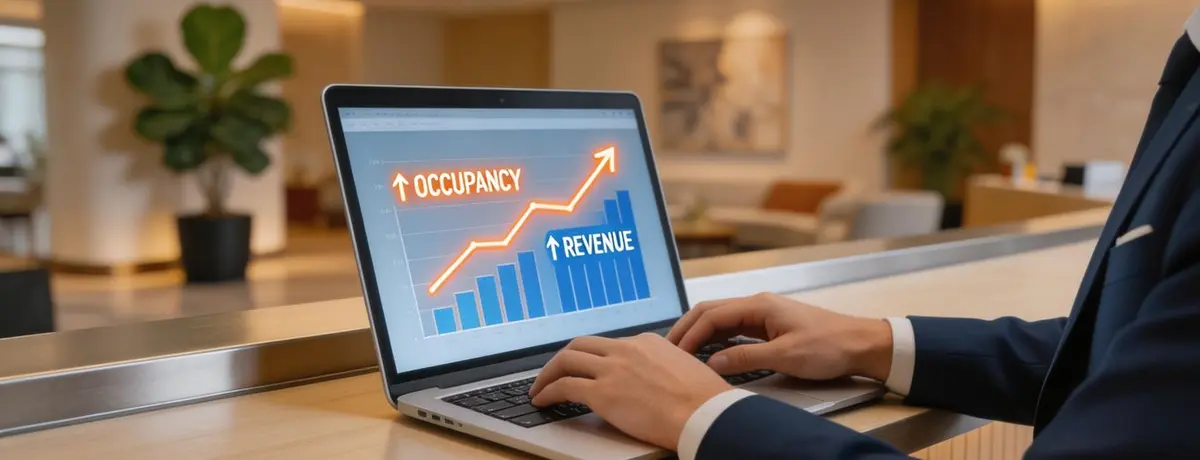
Although the traffic to your website increases every month, is the number of people clicking the reservation button stagnant? Or worse, when you search for your hotel name on Google, do you see major reservation platforms (OTA) advertising on your behalf and appearing at the top instead of your own site, causing potential guests to go to those platforms where you pay a 20% commission without ever visiting your site? We hear this situation from at least one hotel operator almost every day. At the point that digital competition has reached in 2026, simply "being there" is not enough; you need to present yourself to the guest right at the moment they want, with the right message of trust.
As 212 Medya, our most clear experience gained from working one-on-one with our clients in the tourism sector for years is this: SEO for hotels is not just a technical adjustment, but a struggle for survival and independence. In this guide, we will examine step by step how to move a hotel website to the top of Google with 2026 standards, and how to increase direct bookings by breaking free from commission constraints.
What is Hotel SEO? Why is it Important?
Hotel SEO is the process of gaining organic visibility and increasing direct bookings by making the websites of accommodation facilities compliant with the AI-focused algorithms of search engines (particularly Google) in 2026. This strategy aims to minimize the hotel’s dependency on OTAs by encompassing technical optimization, local visibility, rich content production, and user experience.
In practice, we often see this: Many property owners believe SEO is merely about placing keywords. However, in 2026, Google's SGE (Search Generative Experience) system analyzes not only the words but also the user's travel intent. For example, instead of simply providing a list for a user searching for "hotels in Antalya," Google can now summarize the specific amenities offered by that hotel, real user reviews, and video tour content directly on the search results page. Therefore, if your technical infrastructure does not feed this data to Google correctly, it’s not difficult to be invisible in the digital world.
Strengthening your hotel’s digital presence is not just about getting more clicks; it is also about building your brand authority. Guests subconsciously trust the quality of a property when they see a professional and SEO-compliant website. At a basic level, you can make some meta tag adjustments on your own; however, advanced strategic planning is essential to compete with global competitors and major platforms.
Foundations of Hotel SEO Strategy in 2026
As an expert who has been working in the industry for years, I can say that the success of hotel SEO in 2026 is built on three main pillars: content that matches user intent, flawless mobile experience, and strong local authority. Trying to be first in the "cheap hotel" keyword is often a waste of budget. Instead, focusing on niche keywords that highlight your property's unique value proposition (USP) provides much higher conversion rates.
Based on our experience working with clients, the way to increase direct bookings is to be present at every stage of the guest's travel planning cycle (dreaming, planning, booking, and experiencing). If your potential guest encounters your blog post when searching for "the best places to watch the sunrise in Cappadocia," their likelihood of choosing you during the booking phase is 40% higher.
"SEO is not a cost for hotels but the most profitable real estate investment that belongs to you in the digital world of 2026."
Pro Tip: The speed of your website is crucial not only for Google but also for the impatient modern traveler. The mobile loading time of a hotel site should be under 1.5 seconds according to 2026 standards. You can immediately test your site's current condition using Google's PageSpeed Insights tool and take your first action.
Keyword Research: How Are Travelers Searching for You?
Traditional keyword research is no longer sufficient. With the increase of voice searches and AI-assisted queries in 2026, users have started asking Google long and complex questions like, "Which Bodrum hotels are calm, have a children's pool, and accept pets?" This is where "long-tail" keywords come into play.
You should operate with an experience-providing mindset, not just an e-commerce logic. Tourist attractions, restaurants, or events in your area are also part of your keyword pool. In a strategy we applied in an industry-leading firm, we produced content focused not just on hotel rooms but also on hiking routes in the area, increasing organic traffic by 150% in six months. When this traffic directed towards direct booking forms, we observed a significant decrease in advertising costs.
Application Suggestion: When creating your own keyword list, don't just look at the volume. The keyword planner in the Google Ads Panel can sometimes be misleading; therefore, use professional tools (like Semrush or Ahrefs) that analyze which keywords your competitors are getting traffic from. If this seems complicated, you can manage this process based on data by obtaining professional SEO services.
Technical SEO and Structured Data (Schema Markup)
In 2026, Google bots no longer just read your site; they comprehend it like a database. 'Hotel Schema' markups developed specifically for hotels allow your room prices, availability status, and star ratings to appear directly in search results. This is a factor that dramatically increases click-through rates (CTR).
Some critical points to pay attention to on the technical SEO side are as follows:
- HTTPS Security: An SSL certificate is a must for a site where your guests enter payment and personal information.
- Site Architecture: Having pages like rooms, restaurants, spa, and activities in a hierarchy (e.g., /odalar/suit-oda) helps Google utilize its crawling budget effectively.
- Multilingual SEO: If you are hosting guests from abroad, translating alone is not enough. Hreflang tags need to be properly configured for each language. With specialized work like English SEO service or German SEO according to your target market, you can appear local in every market.
Pro Tip: Optimize the sizes of your images and use the WebP format. Hotel sites inherently require high-resolution visuals; however, a 5 MB photo can make your site unresponsive. Never forget to add your keywords to the "alt" texts of the visuals (e.g., Antalya sea view suite room).
Local SEO: Ways to Be Visible on Google Maps
Local SEO in hospitality is perhaps more critical than general SEO. Because when a traveler reaches an area or researches the area, they usually make decisions through Google Maps. In 2026, the Google Business Profile is no longer just a place for address registration; it has become a standalone social media and reservation channel.
The biggest mistake we see when working with our clients is leaving questions in the Google Business Profile unanswered or giving late/standard responses to reviews. Google promotes profiles that are actively updated, have renewed photos, and engage with users to the top of map results. You can further accelerate this process by advertising on maps. By obtaining local SEO services, you can stay one step ahead of your competitors in your region.
The table below presents a comparison of the efficiency of the fundamental channels faced by hotels in their SEO efforts in 2026:
Kriter Organik SEO OTA Platformları Google Ads
Maliyet Yapısı Sabit Yatırım / Düşük Uzun Vade %15 - %25 Komisyon Tıklama Başı Ödeme (CPC)
Sürdürülebilirlik Yüksek (Kalıcı Etki) Düşük (Sıralama Değişken) Düşük (Bütçe Bağımlı)
Veri Kontrolü Tamamen Sizde OTA Kontrolünde Kısıtlı
Güven Faktörü Çok Yüksek Orta Düşük-Orta
Application Suggestion: Add professional videos featuring your hotel's outdoor, indoor, and especially breakfast/dining attractive elements to your Google Business Profile. In 2026, video content receives 60% more engagement compared to static photos.
Content Marketing: Not Just Rooms, Buy a Story
The weakest link of your hotel website is often stuck in the "About Us" and "Rooms" pages. However, for SEO success, your site needs to become an authoritative source. Design your blog section like a guide for tourists visiting the area. Titles like "Places to Visit in Istanbul in 48 Hours" or "5 Local Delicacies You Must Try While Staying at Our Hotel" attract the attention of both search engines and users.
As a real-life example, with a boutique hotel client in the Aegean region, we created a new channel that drew traffic equal to the hotel’s homepage solely through in-depth guide content written on "secret coves in the area." 5% of the visitors from this content proceeded to the direct booking page. This ratio is much higher quality than traffic coming from OTAs because the guest knows and trusts you now. For more details, check our guide on escaping commissions.
Pro Tip: When creating your content, don't just focus on text. Use interactive maps, current weather widgets, or 360-degree virtual tour integrations to increase the time users spend on your page. Google always rewards pages with high interaction time.
5-Step Checklist to Follow in the Hotel SEO Process
It can be hard to do everything at once. However, to succeed in 2026, you can prioritize the following key steps:
- Technical Audit: Do you have broken links, slow-loading pages, or mobile incompatibility on your site? Producing content without solving these fundamental issues is like filling a bucket with holes.
- Niche Keyword Identification: Focus not just on the word "hotel" but also on features that set you apart from your competitors (e.g., gluten-free kitchen, remote work-friendly hotel, thermal pool).
- Local Authority Building: Optimize your Google Business Profile and update your information on platforms like TripAdvisor and Foursquare.
- Content Compliant with E-E-A-T Principles: Convey principles of Experience, Expertise, Authoritativeness, and Trustworthiness in your content. Dynamically pull guest reviews onto your pages.
- Link Building (Backlink): Quality links coming to your site from local tourism associations, travel blogs, and authoritative news sites will enhance your reputation in Google's eyes.
You can implement this list with your own team; however, to avoid making strategic mistakes and wasting time, working with an SEO agency can help you achieve a faster return on your investment.
Conclusion: Declare Your Digital Independence in 2026
SEO work for hotels is not a one-time project but a continuous digital marketing marathon. Instead of being crushed under the high commissions of OTAs, investing in your own digital property is the smartest business decision you can make in 2026. Remember, being on the first page of Google not only means more visitors but also higher profitability and a sustainable brand.
If you also want to fully utilize your hotel’s digital potential, outshine your competitors in search results, and increase your direct bookings, you need a professional roadmap. At 212 Medya, we are at your side with our deep experience in the tourism sector and the latest SEO technologies of 2026. We are ready to elevate your hotel to the top of Google with our data-driven, transparent, and result-oriented strategies.
You can immediately [Contact Us] to get a free preliminary analysis of your site and meet the growth plan we will prepare specifically for you. Take a step today to solidify your place in the digital world.