
Invisible Barriers: How We Recovered 5,000 Unindexed Pages with an SEO Analysis of an E-Commerce Site
Unindexed pages on your e-commerce site may be reducing your turnover. Discover how we made 5,000 pages visible on Google and increase your organic traffic!
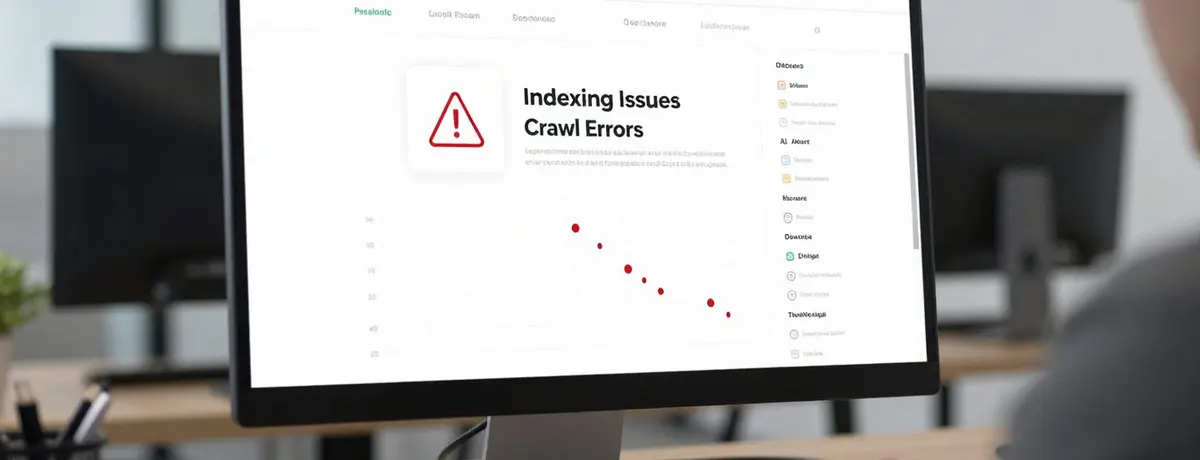
You have uploaded thousands of products to your website, prepared detailed descriptions for each, and invested significant effort to keep the stocks updated. However, the chart you encounter when you open the Google Search Console panel is a complete disappointment: thousands of pages waiting under the warnings "Discovered - currently not indexed" or "Crawled - currently not indexed"... If you are not getting the desired share of organic traffic despite spending on advertising budgets, it likely means there are "invisible barriers" where Googlebot is caught deep within your site.
In practice, we often see this: Many business owners think that just producing content and entering products will be sufficient. However, in the complex algorithm world of 2026, your technical infrastructure must clearly show the way to Google. We share the critical SEO analysis process we experienced with one of our e-commerce clients that enabled over 5,000 pages to be indexed within just one month and increased turnover by 40% in detail in this guide.
What is SEO Analysis and Indexing?
SEO analysis is the process of deeply examining technical, content-based, and authority-based factors that affect a website's search engine visibility to generate an improvement roadmap. Indexing is the phase where Googlebot crawls your page and adds it to the database, thus making it show up in search results made by users.
This process is crucial for structures that host thousands of URLs like e-commerce sites. If your page is not indexed, even if you have the best product in the world, potential customers will never find you. At this point, a professional SEO service comes into play to determine why Google is ignoring your site.
Experts analyzing the website architecture in a professional digital control room
The Invisible Cost of Indexing Issues
According to our experience working with clients, 5,000 unindexed pages mean thousands of potential clicks missed daily and thousands of lost turnover. Especially in projects where we provide e-commerce consulting, we see this issue as not just a technical mistake but a direct financial leak. As the number of pages increases, the crawl budget allocated by Google for your site must be used more efficiently.
5 Key Reasons Blocking Indexing in E-Commerce Sites
There can be many technical reasons for pages in an e-commerce site being rejected by Google. According to current algorithm approaches in 2026, we can list the most common barriers as follows:
- Poorly Structured Faceted Navigation: The creation of separate URLs for each color, size, and price filter causes Google to get into an endless loop.
- Thin and Duplicative Content: Very similar product descriptions are labeled as "worthless" by Google.
- Robots.txt Errors: Accidentally closing critical folders (like category pages) to crawling.
- Insufficient Internal Linking: Pages that are buried deep and far from the homepage cannot be discovered by Googlebot.
- Canonical Tag Confusion: Misstating the true source of pages results in confusion for Google.
Professional Tip: Check the "Coverage" report in Google Search Console every week. If the number of "Discovered - currently not indexed" pages is rapidly increasing, this is a problem of crawl budget management, not content quality.
Case Study: How We Recovered a Lost Treasure of 5,000 Pages?
At one of our industry-leading textile e-commerce clients, we noticed that around 5,000 of the total 12,000 product pages did not appear in search results at all. During the initial SEO audit, we determined that the root cause of the problem was the site's transition to a new JavaScript-based infrastructure, and that Googlebot had difficulty rendering this content.
Based on our experience while working with clients, any update made during technical transitions without the approval of an SEO expert can throw years of work down the drain overnight. We managed the process in this project with the following steps:
- Log Analysis Conducted: We examined server logs to understand which pages Googlebot visited and which pages it returned from.
- Server-Side Rendering (SSR) Applied: We provided Google with pages heavily reliant on JavaScript in ready HTML format.
- Dynamic Sitemap Revision: We established a new sitemap structure prioritizing only high-quality and in-stock 5,000 pages that we wanted indexed.
- Internal Link Architecture: We created strong links from authority-rich categories to subpages that were not indexed.
The result was tremendous. By the end of the second week, indexing speed increased by 300%. By the end of the fourth week, all 5,000 pages in question were indexed, leading to a 110% increase in organic traffic.
SEO expert showing the organic traffic increase graph
Comparison of Technical SEO Analysis and Manual Control
Many business owners think that conducting a few analyses with free tools is sufficient. However, there are gaping chasms between deep technical analysis and superficial checks. The table below clarifies why a professional approach is needed:
Özellik Ücretsiz/Manuel Kontrol Profesyonel Teknik SEO Analizi (212 Medya)
Kapsam Sadece ilk 500 sayfa Sitenin tamamı (Milyonlarca URL olsa dahi)
Derinlik Sadece meta etiketleri Log analizi, Rendering analizi, Crawl Budget yönetimi
Çözüm Sadece hata listesi verir Hata tespiti ve yazılımsal çözüm uygulama desteği
Gelecek Odaklılık Anlık veri 2026 algoritma trendlerine göre strateji
At a basic level, you can see obvious errors using free tools; however, detecting and recovering from large-scale losses like 5,000 pages may require server-level interventions with the experience of an SEO agency.
Modern Methods to Increase Indexing Speed in 2026
As of 2026, Google has become much more selective when crawling sites for energy savings and efficiency. According to the latest guidelines published by Google Search Central, pages perceived as "useless" can now wait for months to be crawled. To speed up this process, we must implement next-generation techniques.
Use of Indexing API
Stock changes and newly added products are critical for e-commerce sites. The use of Google Indexing API, which was once recommended only for classifieds and job sites, has now become an indispensable part of the e-commerce world in 2026. With this system, you can instantly notify Google of any changes on the page.
Entity-Based SEO and Index Relationship
Google now evaluates pages not individually but as an "entity." To have your page indexed, you should use enriched data (Schema Markup) that proves you are an expert on that subject. For example, if a product page has not only the price but also real user reviews, stock status, and video content, Google finds that page "worthy of being indexed."
Application Recommendation: Fully integrate Organization, Product, and Review schema structures into all product pages on your site. This can increase the speed at which crawler bots interpret the content by up to 50%.
How Can You Test Indexing Issues Yourself?
Before seeking professional support, you can implement the following simple yet effective steps to understand the state of your site:
- Site Operator Search: Type site:yourdomain.com into the Google search bar. Compare this number with the total number of pages on your site. If the difference is more than 20%, you have a serious problem.
- URL Inspection Tool: Paste a suspected URL into the search bar of Search Console. Examine the technical reason below the warning "Google cannot index this page."
- Crawl Statistics: See how often Googlebot visits your site from Settings > Crawl Statistics. If the daily crawl number is significantly lower than your total number of pages, your crawl budget may be wasted.
Laptop screen displaying rise graphs from the SEO audit panel
Key Points
- Crawl Budget is Limited: Google allocates a limited amount of time to your site each day; do not waste this time on empty pages.
- JavaScript is a Critical Barrier: If your content is loaded on the client-side, Google may not see it.
- Content Quality Triggers Indexing: Unique 500 pages will get indexed faster than 5,000 duplicate pages.
- Structured Data (Schema) is Mandatory: Sites that do not tell bots what the page is about fall behind in the 2026 standards.
- Professional Analysis Can Save Lives: Issues that would take months to determine manually can be resolved in hours with technical SEO tools and expertise.
- Speed and Performance: Every 100ms improvement in page load speed directly affects the crawl rate.
Frequently Asked Questions
Why are not all pages on my site appearing on Google?
The most basic reason for this is insufficient crawl budget, technical errors (noindex tags, robots.txt blocks), or Google's assessment of the content as low-quality/duplicate.
What does "Discovered - currently not indexed" mean in Search Console?
It indicates that Google is aware of the page's existence but doesn't yet deem it worthy of crawling or indexing. It usually points to server load or content quality issues.
How long does it take to resolve indexing issues?
Depending on the source of the problem, after technical corrections, Google's re-crawling and indexing of the pages typically takes between 2 to 4 weeks.
Do unindexed pages harm our SEO?
Yes, they do. As long as these pages keep getting crawled, they consume crawl budget and can reduce Google’s perception of your site's overall quality, affecting the ranking of your other pages as well.
Do paid ads increase indexing speed?
Directly, no. Although Google advertising services can increase your traffic, the organic indexing process is managed by a completely independent algorithm.
Conclusion: Make the Invisible Visible
The non-indexing of 5,000 pages on your e-commerce site is not a fate but a technical problem. As we observed in the case from 2026, with the right diagnosis and strategic intervention, you can not only recover these pages but also turn them into sales machines. Remember, if Google cannot find your site, it means your customers cannot find it either.
If you find that you are underutilizing the potential on your site and noticing that thousands of your products are not appearing in search results, a professional perspective can make a difference. As 212 Medya, we conduct an x-ray of your website with the technical experience accumulated over the years and our up-to-date analysis tools, eliminating obstacles one by one. Let’s overcome the invisible barriers of your site together and build the traffic you deserve.
You can contact us to get more information or to schedule a personal SEO check-up appointment for your site.